رئيس مجلس الإدارة ورئيس التحرير أحمد حمدي

كورس COMPLETE Intro Psychology Course

👤 PsychExamReview 🎬 200 درس ⏱️ 28 ساعة 9 دقيقة 📶 مبتدئ 🇺🇸 English
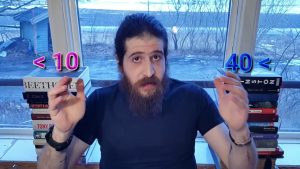
What is Psychology? (Intro Psych Tutorial #1)
🏆أوائل أكاديمية مصر 24اتعلّم كل يوم ونافس على التاج 👑الترتيب ←
EG-24 ACADEMY
EG24
EG-24ACADEMY
— أكاديمية مصر 24 —
CERTIFICATE
OF COMPLETION
THISCERTIFICATE IS PROUDLY PRESENTED TO
اسمك هنا
FOR SUCCESSFULLY COMPLETING THE COURSE
كورس COMPLETE Intro Psychology Course
ISSUED ON
02 أكتوبر 2026
Ahmed Hamdy
AHMED HAMDY
FOUNDER
VERIFY CERTIFICATE
CERTIFICATE ID
PREVIEW
رقم تحقق الشهادة
EG24
ACADEMY
LEARN GROW
🔒

شاهد 50% من الكورس واحصل على شهادة إتمام باسمك

✅ تتبع تقدمك في الكورس
🏆 شهادة مجانية عند الإتمام
📊 إحصائياتك محفوظة دائماً
🔖 استكمل من حيث توقفت

إنشاء حساب مجاني يأخذ ثوانٍ فقط

📋 محتوى الكورس 200 درس · 28 ساعة 9 دقيقة
  • 1 What is Psychology? (Intro Psych Tutorial #1) 4:24
  • 2 Nature versus Nurture (Intro Psych Tutorial #2) 3:20
  • 3 Dualism and Monism (Intro Psych Tutorial #3) 4:51
  • 4 What is Phrenology? (Intro Psych Tutorial #4) 5:28
  • 5 Structuralism and Functionalism (Intro Psych Tutorial #5) 3:55
  • 6 Difficulties of Psychological Research (Intro Psych Tutorial #6) 6:44
  • 7 The Scientific Mindset: Skepticism and Humility (Intro Psych Tutorial #7) 6:08
  • 8 Observer Bias: Clever Horses and Dull Rats (Intro Psych Tutorial #8) 9:11
  • 9 Operational Definitions and Construct Validity (Intro Psych Tutorial #9) 8:00
  • 10 Case Studies and the Survey Method (Intro Psych Tutorial #10) 5:56
  • 11 Populations and Samples (Intro Psych Tutorial #11) 9:03
  • 12 Real and Illusory Correlations, Scatterplots, and Causation (Intro Psych Tutorial #12) 12:03
  • 13 The Third Variable Problem (Intro Psych Tutorial #13) 7:37
  • 14 The Experimental Method (Intro Psych Tutorial #14) 8:12
  • 15 Measures of Central Tendency (Intro Psych Tutorial #15) 6:10
  • 16 Difference between a Theory and a Hypothesis (Intro Psych Tutorial #16) 5:40
  • 17 Measures of Variance: Range and Standard Deviation (Intro Psych Tutorial #17) 5:19
  • 18 Frequency Distributions, Normal Curves, and Skew (Intro Psych Tutorial #18) 5:10
  • 19 Understanding Significance and P-values (Intro Psych Tutorial #19) 8:18
  • 20 Internal Validity (Intro Psych Tutorial #20) 5:20
  • 21 External Validity (Intro Psych Tutorial #21) 4:35
  • 22 Ethical Guidelines for Psychological Research (Intro Psych Tutorial #22) 4:37
  • 23 Neuron Structure - Parts of a Neuron (Intro Psych Tutorial #23) 2:56
  • 24 The Action Potential (Intro Psych Tutorial #24) 8:23
  • 25 How Neurons Communicate: The Synapse (Intro Psych Tutorial #25) 2:56
  • 26 What Happens to Neurotransmitters After Release? (Intro Psych Tutorial #26) 4:46
  • 27 Introduction to Neurotransmitters (Intro Psych Tutorial #27) 7:54
  • 28 Influence on Neurotransmitter: Agonist or Antagonist? (Intro Psych Tutorial #28) 9:06
  • 29 Organization of the Nervous System (Intro Psych Tutorial #29) 9:18
  • 30 Early Methods of Studying the Brain (Intro Psych Tutorial #30) 9:31
  • 31 Brain Scanning and Imaging Techniques (Intro Psych Tutorial #31) 11:21
  • 32 Parts of the Brain: Hindbrain Structures (Intro Psych Tutorial #32) 5:09
  • 33 Parts of the Brain: Midbrain Structures (Intro Psych Tutorial #33) 7:13
  • 34 Parts of the Brain: Forebrain: Subcortical Structures (Intro Psych Tutorial #34) 13:13
  • 35 Parts of the Brain: Forebrain; Cerebral Cortex (Intro Psych Tutorial #35) 11:03
  • 36 Split Brains: What Happens When You Sever the Corpus Callosum? (Intro Psych Tutorial #36) 15:20
  • 37 Introduction to Genetics and Shared Genes (Intro Psych Tutorial #37) 9:23
  • 38 What is Heritability? (Intro Psych Tutorial #38) 10:30
  • 39 Chromosomal Abnormalities and Molecular Genetics (Intro Psych Tutorial #39) 14:19
  • 40 Introduction to Sensation and Perception (Intro Psych Tutorial #40) 6:16
  • 41 Psychophysics! (Intro Psych Tutorial #41) 8:59
  • 42 Signal Detection Theory (Intro Psych Tutorial #42) 10:31
  • 43 Parts of the Eye: How Vision Works (Intro Psych Tutorial #43) 10:56
  • 44 Blood Vessels, Floaters, and Blind Spots (Intro Psych Tutorial #44) 8:31
  • 45 Photoreceptors, Receptive Fields, and Lateral Inhibition (Intro Psych Tutorial #45) 12:25
  • 46 Color Vision: Trichromatic and Opponent Process Theories (Intro Psych Tutorial #46) 13:54
  • 47 Understanding Colorblindness (Intro Psych Tutorial #47) 13:16
  • 48 How Hearing Works: Parts of the Ear (Intro Psych Tutorial #48) 10:07
  • 49 Vestibular Sense: Balance & Orientation (Intro Psych Tutorial #49) 5:41
  • 50 Touch, Haptic Perception, & the Somatosensory Cortex (Intro Psych Tutorial #50) 10:49
  • 51 Pain Perception (Intro Psych Tutorial #51) 8:48
  • 52 Olfaction: Sense of Smell (Intro Psych Tutorial #52) 7:04
  • 53 Gustation: Taste Perception (Intro Psych Tutorial #53) 11:05
  • 54 Synesthesia: Mingling the Senses (Intro Psych Tutorial #54) 5:51
  • 55 Gestalt Laws of Perception (Intro Psych Tutorial #55) 9:28
  • 56 Perceptual Constancy (Intro Psych Tutorial #56) 5:43
  • 57 Depth Perception (Intro Psych Tutorial #57) 13:42
  • 58 Culture and Perception (Intro Psych Tutorial #58) 8:08
  • 59 Learning Theory & Classical Conditioning (Intro Psych Tutorial #59) 8:39
  • 60 Extinction, Generalization, & Discrimination (Intro Psych Tutorial #60) 7:15
  • 61 Scared Infants and Sick Rats: Aversive Conditioning (Intro Psych Tutorial #61) 12:19
  • 62 Operant Conditioning: Behavior & Consequences (Intro Psych Tutorial #62) 13:45
  • 63 Operant Boxes & Schedules of Reinforcement (Intro Psych Tutorial #63) 16:11
  • 64 Chaining, Shaping, & Instinctive Drift (Intro Psych Tutorial #64) 9:11
  • 65 The Premack Principle (Intro Psych Tutorial #65) 3:11
  • 66 The Rescorla-Wagner Model (Intro Psych Tutorial #66) 3:37
  • 67 Observational Learning: Bandura's Bobo Doll Study (Intro Psych Tutorial #67) 6:23
  • 68 Latent Learning & Cognitive Maps (Intro Psych Tutorial #68) 10:56
  • 69 Abstract Learning & Insight Learning (Intro Psych Tutorial #69) 6:26
  • 70 Introduction to Memory (Intro Psych Tutorial #70) 5:19
  • 71 Sensory Memory (Intro Psych Tutorial #71) 7:58
  • 72 Short-Term Memory and Working Memory (Intro Psych Tutorial #72) 11:02
  • 73 Long-Term Memory (Intro Psych Tutorial #73) 9:06
  • 74 Memory Failures: Transience, Absentmindedness, & Blocking (Intro Psych Tutorial #74) 8:24
  • 75 Memory Failures 2: Misattribution, Suggestibility, Bias, & Persistence (Intro Psych Tutorial #75) 12:34
  • 76 Emotion & Memory (Intro Psych Tutorial #76) 6:24
  • 77 Biology of Memory: The Hippocampus (Intro Psych Tutorial #77) 5:44
  • 78 Long-Term Potentiation (LTP) (Intro Psych Tutorial #78) 3:31
  • 79 Memory Improvement Techniques (Intro Psych Tutorial #79) 11:58
  • 80 Memory Improvement Techniques 2 (Intro Psych Tutorial #80) 11:24
  • 81 Mnemonic Strategies (Intro Psych Tutorial #81) 13:16
  • 82 Language Acquisition - Skinner vs. Chomsky (Intro Psych Tutorial #82) 4:29
  • 83 Introduction to Linguistics (Intro Psych Tutorial #83) 10:01
  • 84 Universal Grammar (Intro Psych Tutorial #84) 4:28
  • 85 Language Development (Intro Psych Tutorial #85) 11:40
  • 86 The Interactionist Approach to Language Acquisition (Intro Psych Tutorial #86) 5:24
  • 87 How Does Language Influence Thought? (Intro Psych Tutorial #87) 6:57
  • 88 Category Recognition (Intro Psych Tutorial #88) 7:03
  • 89 Problem Solving (Intro Psych Tutorial #89) 6:15
  • 90 Obstacles to Problem Solving (Intro Psych Tutorial #90) 9:08
  • 91 Problem-Solving: Algorithms vs. Heuristics (Intro Psych Tutorial #91) 4:50
  • 92 The Availability Heuristic (Intro Psych Tutorial #92) 6:52
  • 93 The Representativeness Heuristic (Intro Psych Tutorial #93) 6:36
  • 94 The Framing Effect (Intro Psych Tutorial #94) 7:11
  • 95 The Sunk-Cost Fallacy (Intro Psych Tutorial #95) 7:04
  • 96 Benefits of Heuristics (Intro Psych Tutorial #96) 5:52
  • 97 Problems of Consciousness (Intro Psych Tutorial #97) 9:26
  • 98 Types of Consciousness (Intro Psych Tutorial #98) 5:01
  • 99 Levels of Consciousness (Intro Psych Tutorial #99) 6:27
  • 100 Characteristics of Consciousness (Intro Psych Tutorial #100) 13:41
  • 101 How Much Control Do We Have Over Our Minds? (Intro Psych Tutorial #101) 14:34
  • 102 The Circadian Rhythm (Intro Psych Tutorial #102) 11:03
  • 103 Stages of Sleep (Intro Psych Tutorial #103) 15:14
  • 104 What Happens When You Don't Get Enough Sleep? (Intro Psych Tutorial #104) 15:36
  • 105 Sleep Disorders (Intro Psych Tutorial #105) 10:08
  • 106 Is Polyphasic Sleep Possible? (Intro Psych Tutorial #106) 16:32
  • 107 Dreaming: Freud, Activation-Synthesis, & Information Processing (Intro Psych Tutorial #107) 11:08
  • 108 How Do Drugs Influence Neural Communication? (Intro Psych Tutorial #108) 9:32
  • 109 How Are Psychoactive Drugs Classified? (Intro Psych Tutorial #109) 13:17
  • 110 What is Hypnosis? (Intro Psych Tutorial #110) 9:47
  • 111 What is Meditation? (Intro Psych Tutorial #111) 12:07
  • 112 What is Intelligence? (Intro Psych Tutorial #112) 6:25
  • 113 How Should We Define Intelligence? (Intro Psych Tutorial #113) 17:11
  • 114 Assessing Intelligence (Intro Psych Tutorial #114) 8:25
  • 115 Assessing Assessments - Types of Validity (Intro Psych Tutorial #115) 10:34
  • 116 Reliability of Assessments (Intro Psych Tutorial #116) 10:07
  • 117 History of Intelligence Testing (Intro Psych Tutorial #117) 14:08
  • 118 IQ Variation & Distribution (Intro Psych Tutorial #118) 15:56
  • 119 What Causes IQ Differences? (Intro Psych Tutorial #119) 16:17
  • 120 Specific Genes and IQ (Intro Psych Tutorial #120) 8:16
  • 121 Group Differences in IQ (Intro Psych Tutorial #121) 13:28
  • 122 Sex Differences in IQ (Intro Psych Tutorial #122) 12:00
  • 123 Racial Differences in IQ (Intro Psych Tutorial #123) 13:21
  • 124 The Flynn Effect and Environmental Factors on IQ (Intro Psych Tutorial #124) 10:08
  • 125 Expectation, Mindset, and IQ (Intro Psych Tutorial #125) 12:52
  • 126 Stereotype Threat & Identity Contingencies (Intro Psych Tutorial #126) 9:00
  • 127 Can You Improve Your IQ? (Intro Psych Tutorial #127) 18:34
  • 128 What is Personality? (Intro Psych Tutorial #128) 5:47
  • 129 Psychoanalysis & Freudian Personality Structure; Id, Ego, & Superego (Intro Psych Tutorial #129) 11:42
  • 130 Freud's Psychosexual Stages (Intro Psych Tutorial #130) 12:39
  • 131 Freudian Defense Mechanisms (Intro Psych Tutorial #131) 13:20
  • 132 Psychodynamic Theorists; Adler, Horney, Jung (Intro Psych Tutorial #132) 5:56
  • 133 Projective Techniques - The Rorschach Inkblot Test and the TAT (Intro Psych Tutorial #133) 7:52
  • 134 Trait-Based Assessment of Personality (Intro Psych Tutorial #134) 7:01
  • 135 The Forer Effect or Barnum Effect (Intro Psych Tutorial #135) 6:11
  • 136 The Minnesota Multiphasic Personality Inventory - MMPI (Intro Psych Tutorial #136) 3:16
  • 137 Which Personality Traits Matter? (Intro Psych Tutorial #137) 7:10
  • 138 The Five Factor Model or Big Five (Intro Psych Tutorial #138) 5:51
  • 139 Traits and Behavior (Intro Psych Tutorial #139) 8:29
  • 140 What Causes Trait Differences? (Intro Psych Tutorial #140) 7:32
  • 141 Genes and Personality (Intro Psych Tutorial #141) 8:10
  • 142 The Socio-Cognitive Approach to Personality (Intro Psych Tutorial #142) 4:55
  • 143 Existential Psychology (Intro Psych Tutorial #143) 4:54
  • 144 Humanistic Psychology - Abraham Maslow & Carl Rogers (Intro Psych Tutorial #144) 3:21
  • 145 The Self and Reciprocal Determinism (Intro Psych Tutorial #145) 7:24
  • 146 Self-Efficacy, Locus of Control, and Self-Perception (Intro Psych Tutorial #146) 10:32
  • 147 The Myers-Briggs Type Indicator - MBTI (Intro Psych Tutorial #147) 12:11
  • 148 What is an Emotion? (Intro Psych Tutorial #148) 8:02
  • 149 How Do Emotions Happen? (Intro Psych Tutorial #149) 12:42
  • 150 Misattribution of Arousal (Intro Psych Tutorial #150) 4:58
  • 151 Emotions in the Brain (Intro Psych Tutorial #151) 7:35
  • 152 Emotion Pathways in the Brain (Intro Psych Tutorial #152) 8:23
  • 153 The Frontal Lobotomy (Intro Psych Tutorial #153) 6:18
  • 154 Emotional Regulation (Intro Psych Tutorial #154) 5:00
  • 155 The Expression of Emotions (Intro Psych Tutorial #155) 10:08
  • 156 Emotional Expression & Social Interaction (Intro Psych Tutorial #156) 12:38
  • 157 Why Do We Have Emotions? (Intro Psych Tutorial #157) 6:22
  • 158 Motivation - Instincts & Drives (Intro Psych Tutorial #158) 4:41
  • 159 Drive Reduction Theory (Intro Psych Tutorial #159) 4:26
  • 160 Arousal Theory, Yerkes-Dodson Law, and Flow (Intro Psych Tutorial #160) 6:08
  • 161 Hunger Signaling (Intro Psych Tutorial #161) 5:42
  • 162 Introduction to Eating Disorders (Intro Psych Tutorial #162) 7:21
  • 163 Understanding Obesity (Intro Psych Tutorial #163) 10:54
  • 164 Sexual Motivation (Intro Psych Tutorial #164) 6:13
  • 165 Masters & Johnson's Human Sexual Response Cycle (Intro Psych Tutorial #165) 3:18
  • 166 Maslow's Hierarchy of Needs (Intro Psych Tutorial #166) 7:06
  • 167 Intrinsic & Extrinsic Motivations (Intro Psych Tutorial #167) 7:04
  • 168 Delay of Gratification & Ironic Effects of Punishment (Intro Psych Tutorial #168) 8:04
  • 169 Conscious & Unconscious, Approach & Avoidance Motivations (Intro Psych Tutorial #169) 8:17
  • 170 Motivation & Goal Setting (Intro Psych Tutorial #170) 9:36
  • 171 Developmental Psychology & Erikson's 8 Ages of Man (Intro Psych Tutorial #171) 7:45
  • 172 Prenatal Development (Intro Psych Tutorial #172) 7:27
  • 173 Infancy Stage: Motor & Perceptual Development (Intro Psych Tutorial #173) 6:50
  • 174 Early Brain Development (Intro Psych Tutorial #174) 4:36
  • 175 Cognitive Development - Piaget: Assimilation & Accommodation (Intro Psych Tutorial #175) 3:48
  • 176 Cognitive Development: Sensorimotor Stage (Intro Psych Tutorial #176) 8:35
  • 177 Cognitive Development: Preoperational Stage (Intro Psych Tutorial #177) 8:56
  • 178 Cognitive Development: Concrete & Formal Operational Stages (Intro Psych Tutorial #178) 4:05
  • 179 Lev Vygotsky & the Zone of Proximal Development (Intro Psych Tutorial #179) 4:43
  • 180 Attachment & Bonding (Intro Psych Tutorial #180) 11:39
  • 181 Baumrind's Parenting Styles (Intro Psych Tutorial #181) 4:45
  • 182 Kohlberg's Stages of Moral Development (Intro Psych Tutorial #182) 8:30
  • 183 Puberty & Adolescence (Intro Psych Tutorial #183) 4:36
  • 184 Development of Sexual Orientation (Intro Psych Tutorial #184) 5:09
  • 185 Adulthood and Aging (Intro Psych Tutorial #185) 5:36
  • 186 Intro to Social Psychology (Intro Psych Tutorial #186) 3:19
  • 187 Culture & Cultural Dimensions (Intro Psych Tutorial #187) 4:07
  • 188 The Self and Others (Intro Psych Tutorial #188) 6:20
  • 189 Attitudes, Behavior, & Cognitive Dissonance (Intro Psych Tutorial #189) 10:47
  • 190 The Presence of Others: Social Facilitation & Social Loafing (Intro Psych Tutorial #190) 4:56
  • 191 Conformity (Intro Psych Tutorial #191) 8:44
  • 192 Compliance & Persuasion (Intro Psych Tutorial #192) 8:07
  • 193 Obedience & the Milgram Study (Intro Psych Tutorial #193) 10:58
  • 194 Attraction & Relationship Formation (Intro Psych Tutorial #194) 5:58
  • 195 Attractiveness (Intro Psych Tutorial #195) 6:08
  • 196 Situation, Disposition, & The Fundamental Attribution Error (Intro Psych Tutorial #196) 9:34
  • 197 Impression Formation (Intro Psych Tutorial #197) 5:08
  • 198 Stereotypes, Prejudice, & Discrimination (Intro Psych Tutorial #198) 11:33
  • 199 The Robbers Cave Study - Improving Group Relations (Intro Psych Tutorial #199) 5:30
  • 200 The Implicit Association Test - IAT (Intro Psych Tutorial #200) 13:52
▶ يُشغَّل الآن
What is Psychology? (Intro Psych Tutorial #1)

📘 نظرة عامة على الكورس

يتكوّن الكورس من 200 درسًا من تقديم PsychExamReview بإجمالي مدة 28 ساعة و9 دقائق. أول ما ستشاهده هو «What is Psychology? )»، وآخر محطة في الكورس «The Implicit Association Test - IAT )». أطول الدروس «Can You Improve Your IQ? )» بمدة 18 دقيقة، ومتوسط مدة الدرس 8 دقائق. المحتوى موجّه إلى المبتدئين في مجال الصحة النفسية. بمعدل نصف ساعة يوميًا يمكنك إتمام الكورس في 57 يومًا.

لماذا تتعلم COMPLETE Intro Psychology؟

  • المجال الطبي من أكثر المجالات استقراراً وطلباً في سوق العمل محلياً وعالمياً.
  • مجاني بالكامل — ابدأ الآن دون أي رسوم
  • شهادة إتمام باسمك من أكاديمية مصر ٢٤ — أضفها لـ CV وLinkedIn
  • تعلّم في أي وقت — بالسرعة التي تناسبك
  • التعليم الطبي المستمر (CME) إلزامي للأطباء للحفاظ على تراخيصهم وتحديث معلوماتهم.

مسار التعلم في هذا الكورس

يسير الكورس بترتيب متدرّج: What is Psychology? ) ← Pain Perception ) ← How Much Control Do We Have Over Our Minds? ) ← Emotions in the Brain ) ← The Implicit Association Test - IAT ).

المتطلبات السابقة

لا يحتاج الكورس خبرة سابقة في الصحة النفسية؛ يبدأ معك من الأساسيات. كل ما تحتاجه: جهاز متصل بالإنترنت، ووقت ثابت للتطبيق بعد كل درس.

أول درس في الكورس: «What is Psychology? )».

ما تحتاجه لتطبيق الكورس

  • أي موبايل أو كمبيوتر متصل بالإنترنت

ماذا يفيدك هذا الكورس؟

  • فهم المشاعر والتعامل مع الضغوط اليومية
  • مهارات بسيطة لتحسين النوم والتركيز
  • معرفة متى تحتاج دعم متخصص

كم من الوقت تحتاج لإتقان COMPLETE Intro Psychology؟

إجمالي مدة الدروس الفعلية: 28 ساعة و9 دقائق. إذا خصصت 30 دقيقة يوميًا ستنهيه في 57 يومًا، وبساعة يوميًا في 29 يومًا. ومع التطبيق العملي وإعادة المشاهدة احسب ضعف المدة تقريبًا، فالإتقان يأتي من التطبيق وليس من المشاهدة وحدها.

ماذا بعد هذا الكورس؟

بعد إتمام الكورس، يُوصى بالتعمق في: تخصص طبي، بحث علمي، طب المجتمع.

الأقسام الجامعية ذات الصلة

  • كلية الآداب (قسم علم النفس)

تنبيه: الكورس للتوعية ومش بديل عن الطبيب أو الأخصائي النفسي. لو بتمر بوقت صعب، اطلب مساعدة متخصص.

P
المدرّس / القناة
PsychExamReview
🎬
عدد الدروس
200 درس
⏱️
المدة الإجمالية
28 ساعة 9 دقيقة
📶
المستوى
مبتدئ
🌍
اللغة
English
🎓
الشهادة
شهادة إتمام باسمك
✅
المتطلبات
لا توجد متطلبات مسبقة
📂
التصنيف
الصحة النفسية

🎯 ماذا ستتعلم في هذا الكورس

✓
What is Psychology? )
✓
Nature versus Nurture )
✓
Dualism and Monism )
✓
What is Phrenology? )
✓
Structuralism and Functionalism )
✓
Difficulties of Psychological Research )
✓
The Scientific Mindset - Skepticism and Humility )
✓
Observer Bias - Clever Horses and Dull Rats )
✓
+ 191 موضوعًا آخر داخل الكورس

🎯 ماذا يفيدك هذا الكورس

💼
فهم المشاعر والتعامل مع الضغوط اليومية
💼
مهارات بسيطة لتحسين النوم والتركيز
💼
معرفة متى تحتاج دعم متخصص

❓ أسئلة شائعة عن الكورس

كم عدد دروس كورس COMPLETE Intro Psychology؟ +
يضم كورس COMPLETE Intro Psychology 200 درسًا بإجمالي مدة 28 ساعة و9 دقائق. تتراوح مدة الدرس بين دقيقتين و18 دقيقة.
من يقدم كورس COMPLETE Intro Psychology؟ +
يقدمه PsychExamReview، وتعرض مصر 24 دروسه مرتبة في صفحة واحدة مع حفظ تقدمك درسًا بدرس.
هل الكورس مناسب للمبتدئين؟ +
نعم، الكورس موجّه للمبتدئين ولا يحتاج خبرة سابقة. ويبدأ بدرس «What is Psychology? )».
كم يستغرق إتمام الكورس؟ +
إجمالي مدة الدروس 28 ساعة و9 دقائق. بمعدل 30 دقيقة يوميًا تنهيه في 57 يومًا، وبساعة يوميًا في 29 يومًا.
هل أحصل على شهادة بعد الكورس؟ +
نعم، تحصل على شهادة إتمام باسمك من أكاديمية مصر ٢٤، وتُفتح بعد مشاهدة نصف الدروس على الأقل.
هل الكورس مجاني؟ +
نعم، كل الدروس متاحة للمشاهدة دون أي رسوم أو اشتراك.
ماذا يفيدني هذا الكورس؟ +
فهم المشاعر والتعامل مع الضغوط اليومية، ومهارات بسيطة لتحسين النوم والتركيز، ومعرفة متى تحتاج دعم متخصص.
ما الذي أحتاجه لتطبيق الكورس؟ +
أي موبايل أو كمبيوتر متصل بالإنترنت.
ما لغة الشرح في الكورس؟ +
الشرح باللغة الإنجليزية.
✕
🎓 أكاديمية مصر 24
EG24
EG-24 ACADEMY
EG24
EG-24ACADEMY
— أكاديمية مصر 24 —
CERTIFICATE
OF COMPLETION
THISCERTIFICATE IS PROUDLY PRESENTED TO
اسمك هنا
FOR SUCCESSFULLY COMPLETING THE COURSE
اسم الكورس هنا
ISSUED ON
02 أكتوبر 2026
Ahmed Hamdy
AHMED HAMDY
FOUNDER
VERIFY CERTIFICATE
CERTIFICATE ID
PREVIEW
رقم تحقق الشهادة
EG24
ACADEMY
LEARN GROW
أقرب طريق لحلمك — سواء مشروعك الجديد أو وظيفة أحلامك — يبدأ من هنا، بكورسات مجانية 100% للأبد.